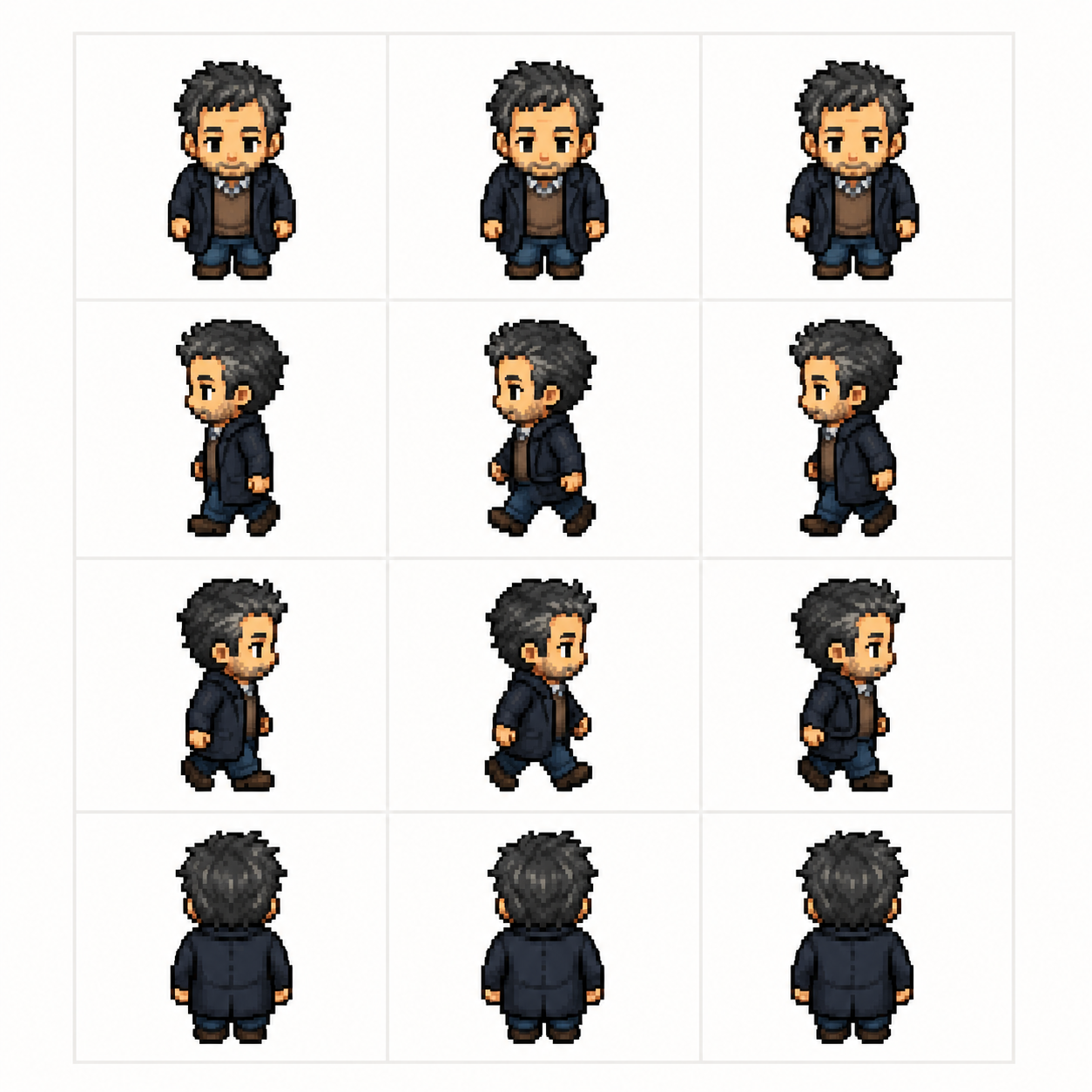
The Protagonist
After his wife's death, he returns to their shared home and begins uncovering the stories attached to the objects she left behind.

A quiet narrative puzzle game about memory, grief, and learning to understand someone through the small moments they left behind.
In Development2D Pixel Narrative Puzzle Adventure
Unity
Retro 16-bit pixel art using warm and cool colour contrasts to separate memory from reality and reflect shifts in emotion.
Gentle, melancholic, nostalgic, and quiet, with a gradually unfolding sense of mystery.
Players explore memories connected to five ordinary objects left behind by the protagonist's late wife. Within each memory, they search for fragments of sound and use an old cassette radio's tuning system to transform static and interference into clear dialogue.
The game explores how much of another person's life can remain unheard, even after years spent together.
This trailer introduces the project's atmosphere, narrative direction, visual language, and central audio-memory mechanic.
After the death of his wife, the protagonist returns to the home they once shared and finally enters an attic he has avoided for years.
Inside, he discovers an old wooden memory box containing five ordinary objects: a train ticket, an unsent letter, a soda tab, a library card, and an old alarm clock. He always knew his wife had a habit of keeping small objects, but he never asked what they meant.
Each object connects to a different stage of her life and contains a memory buried beneath layers of static. The protagonist cannot change the past or bring her back. Instead, he listens.
Through fragments of conversation, silence, waiting, separation, and choice, he begins to hear stories he had never known while she was alive. For the first time, he is not simply remembering her. He is learning to understand her.
The story centres on a husband and wife whose relationship is gradually reconstructed through fragmented memories. These early pixel-art character studies establish their shared visual language, proportions, movement, and expressions.
After his wife's death, he returns to their shared home and begins uncovering the stories attached to the objects she left behind.
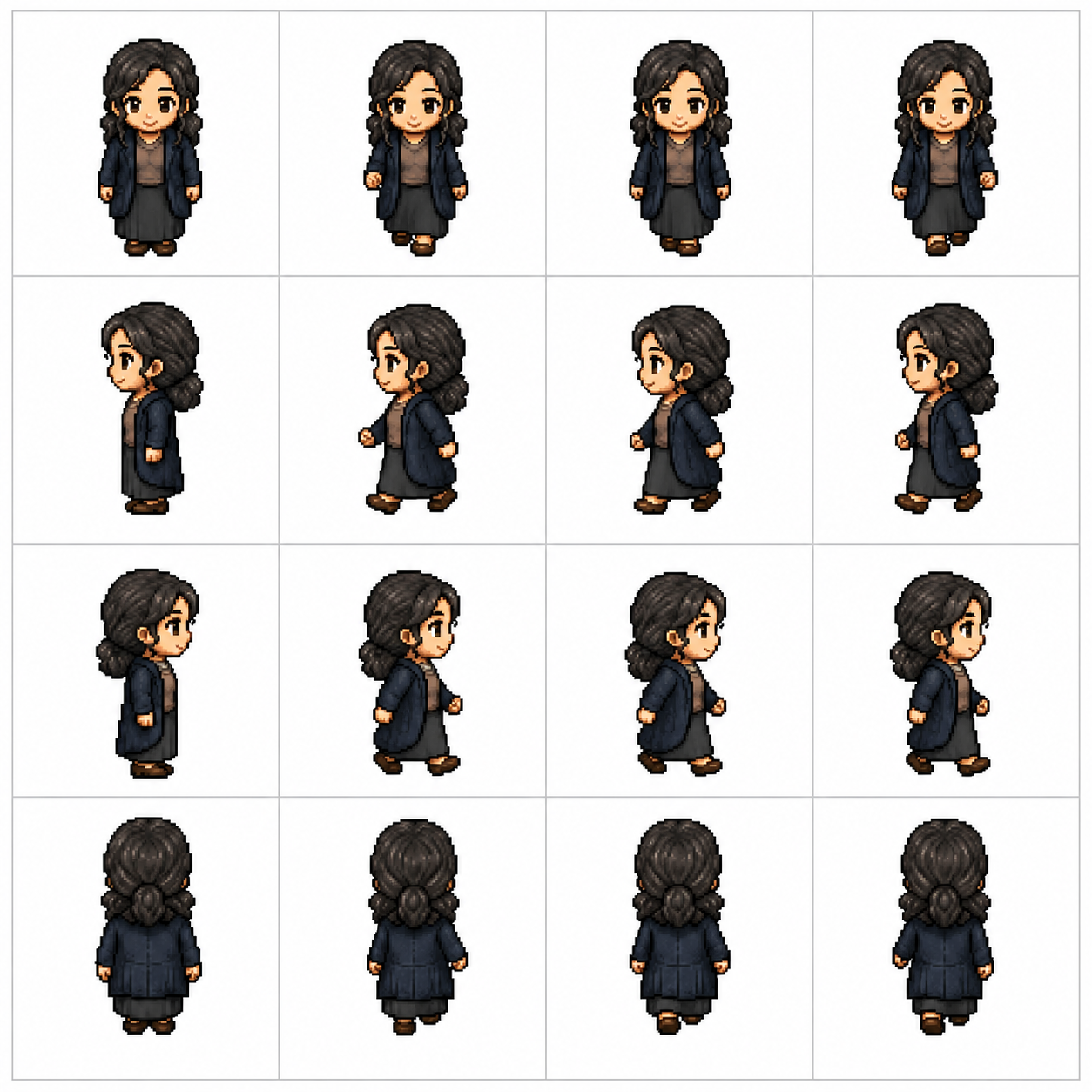
Her life is revealed indirectly through preserved objects, fragmented conversations, and memories the protagonist never fully understood while she was alive.